
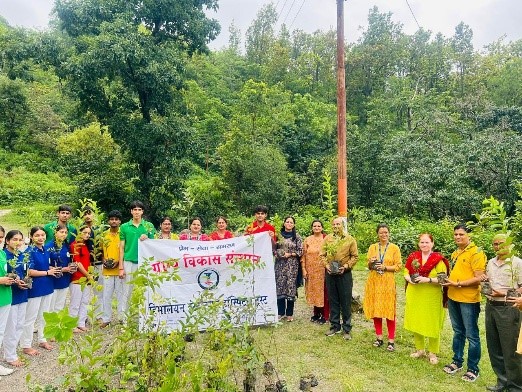
Community participation is essential for the success and sustainability of any community action. A sapling may be small, but it carries the promise of shade, fruit, medicine, and habitat for generations to come. In Uttarakhand, where forests are closely linked with community life and livelihoods, planting a tree is an investment in the future. This spirit guided RDI’s Plantation Campaign 2026, organized from 15 to 25 July across schools and communities, engaging children, community members, and persons with disabilities not only in plantation but also in understanding and caring for trees.
Harela, one of Uttarakhand’s cherished folk festivals, celebrates greenery, agriculture, nature and the arrival of the monsoon. Traditionally associated with prayers for a good harvest, prosperity and well-being, the festival also carries a strong message of environmental responsibility. RDI built on this tradition by turning Harela into an opportunity for environmental education and collective action.
The need for such action is increasingly urgent. Uttarakhand’s forests have historically sustained communities through water, food, fuel, fodder and medicinal resources. However, population growth, expanding settlements, infrastructure development and changing land-use patterns have placed increasing pressure on natural resources. Pollution, waste generation, soil erosion and climate variability further underline the importance of protecting green cover. For communities dependent on natural resources, environmental conservation is directly connected with health, livelihoods and quality of life.
Against this backdrop, RDI’s campaign focused not only on planting trees but also on nurturing environmental responsibility. Schools became centres of learning, where children participated in plantation and learned about the ecological, nutritional and medicinal value of trees. Community members were encouraged to nurture the saplings, reinforcing a simple message: Plantation does not end when a sapling is planted; it begins there.
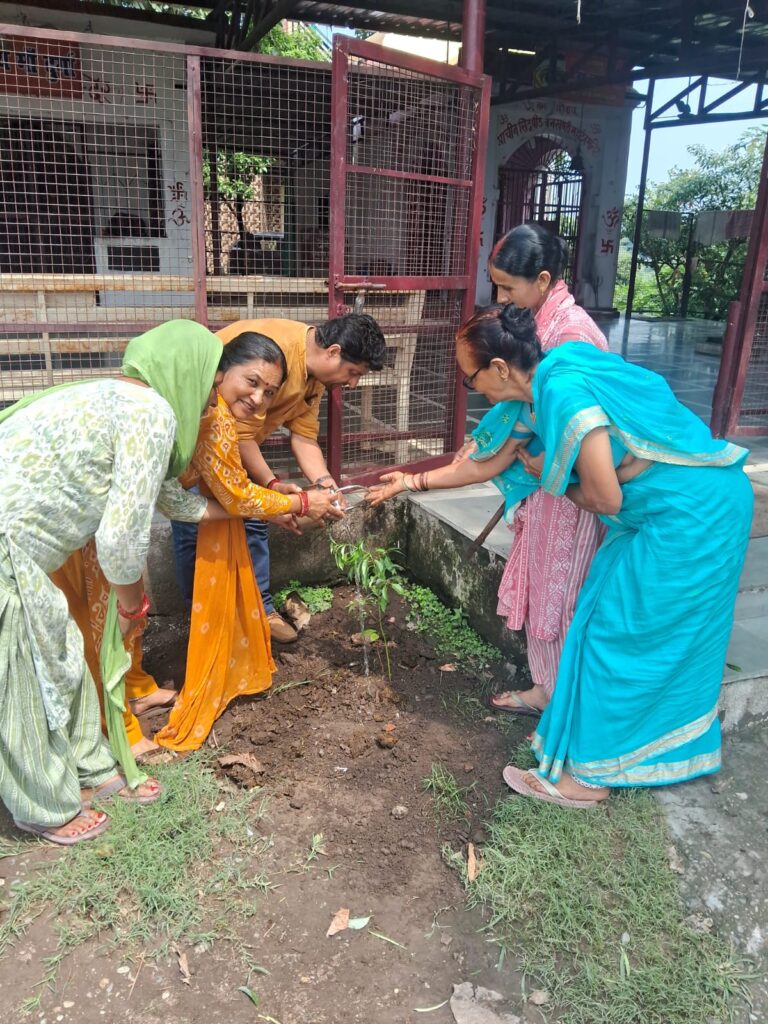
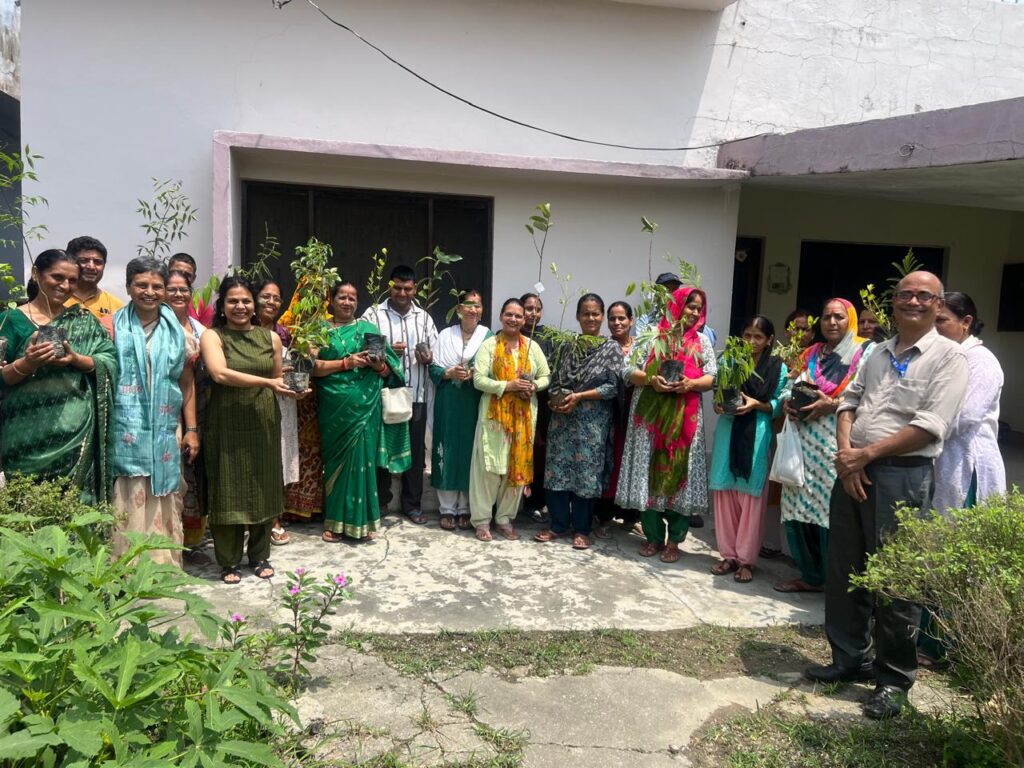
This year, RDI promoted bay leaf, amla, lemon, camphor, neem, bel patra, pomegranate, jamun, guava and mulberry. These plants offer benefits ranging from nutrition and traditional medicine to household use and biodiversity conservation. Plantation activities were undertaken at schools and community locations across Uttarakhand, including Adarsh Nagar, Prateetnagar, Tashila, Kokliyal and Khadri. The campaign was strengthened by broad community participation. Children planted saplings and learned how to care for them, while community members and persons with disabilities contributed to the activities, reinforcing that environmental stewardship is everyone’s responsibility.
The initiative also encouraged conversations beyond plantation: What does a tree give us? Why should we protect it? How can we reduce waste? What can families do to keep their surroundings green? Such questions can transform environmental awareness from a one-day activity into everyday behaviour.
The experience reaffirmed that environmental conservation cannot be the responsibility of one institution alone. Government agencies, schools, communities, civil society organizations, families and individuals must work together to protect natural resources and build climate-resilient communities. Through Harela 2026, RDI brought together culture, education and community action around a shared vision of a greener, more resilient Uttarakhand. Every sapling planted represents care, responsibility and hope.